
Explore the Mystical Elephanta Caves tour: A Journey into Mumbai’s Ancient Heritage
Have you ever stood in front of anything so old that you feel little in a wonderful way?
That’s exactly how I felt the first time I visited the Elephanta Caves Mumbai.
Just an hour away from the fast, noisy life of the city lies an island where massive rock temples were carved over 1,400 years ago. No machines. No modern tools. Just patience, devotion, and stone.
The Elephanta Island Caves, recognized among the most important UNESCO World Heritage Sites in India, are not just tourist attractions. They are carved stories. Sacred spaces. Living proof of India’s artistic brilliance.
If you’re exploring Mumbai and want something deeper than beaches and shopping streets, this is where you should go.
Elephanta Caves History: Ancient Origins & Spiritual Significance
The Elephanta Caves history takes us back to the 5th and 6th centuries. Historians believe these rock-cut temples were built during the Kalachuri dynasty, though some debate still surrounds their exact origin.
The island was originally called Gharapuri, meaning “City of Caves.”
The name “Elephanta” came later. When the Portuguese arrived, they found a massive stone elephant statue near the shore. The statue eventually broke and was moved, but the name remained.
Most of the artworks in the caves belong to Lord Shiva. The carvings depict tremendous themes from Indian mythology, including cosmic dance, heavenly marriage, and spiritual change.
Interestingly, there are evidence of Buddhist caves at Elephanta, indicating centuries of peaceful coexistence across faiths.
These are not random carvings. Each sculpture expresses symbolism, devotion, and intellectual depth.
Where Are Elephanta Caves Located?
Many visitors ask: Where is Elephanta Caves exactly?
The caves are located on Elephanta Island Mumbai, about 11 kilometers northeast of the Gateway of India in the Arabian Sea.
And honestly, the journey itself is part of the magic.
How to Reach Elephanta Caves
- Take a ferry from Gateway of India
- Ferries operate roughly every 30 minutes
- The ride takes about one hour
During the ferry ride, you’ll see fishing boats, naval ships, seagulls, and the Mumbai skyline fading behind you. On clear days, the view is unforgettable.
Once you reach the island:
- Walk along the long jetty
- Or take the small toy train ride
- Then climb around 120 steps to reach the caves
The steps are lined with small stalls selling coconut water, snacks, and handicrafts. It feels less like a tourist trap and more like a quiet village welcoming visitors.
What to Expect on an Elephanta Caves Tour
An Elephanta Caves tour feels like stepping into a giant stone cathedral.
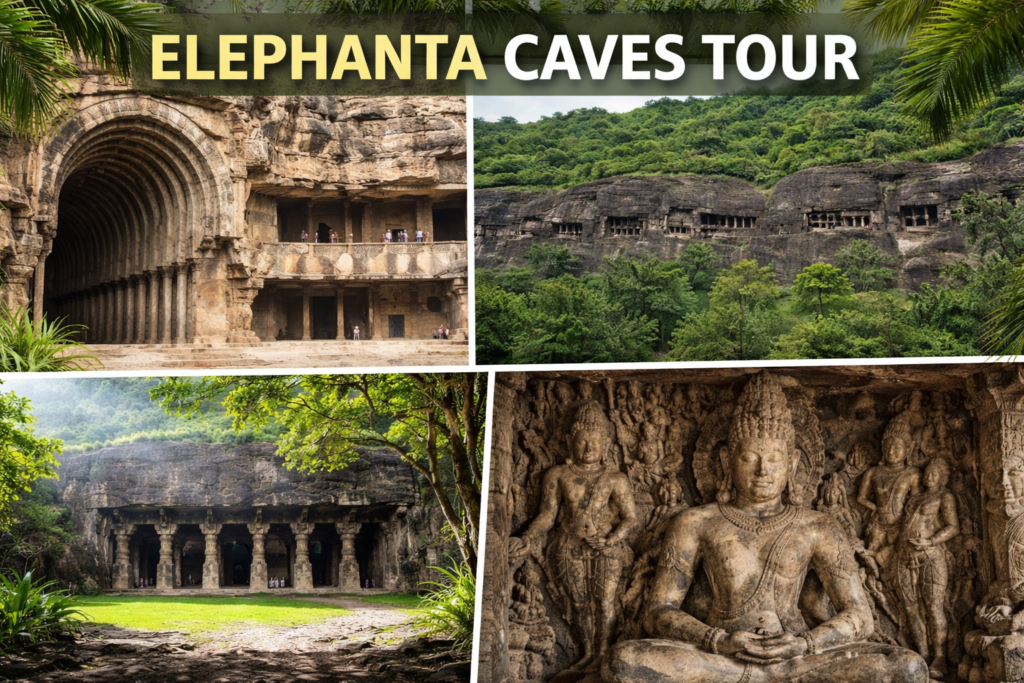
The main attraction is the “Great Cave” — a massive hall carved directly into basalt rock. Rows of stone pillars hold up the ceiling. Sculptures rise from the walls as if they grew from the rock itself.
What’s astonishing is that everything was carved from a single rock mass.
No bricks. No cement. Just chisels and hammers.
The caves remain cool inside, which makes exploring comfortable even during warmer months.
The Iconic Trimurti Sculpture
If there’s one image that defines the Elephanta Island Caves, it’s the Trimurti.
This 20-foot-tall sculpture of Lord Shiva shows three faces:
- The Creator
- The Preserver
- The Destroyer
The balance in the sculpture is incredible. Calm on one side. Strength on the other. Absolute serenity in the center.
It’s not just art. It’s philosophy carved in stone.
Many visitors stand silently in front of it for minutes, absorbing its presence.
Main Temples & Cave Structures
The Great Cave houses multiple shrines and panels depicting:
- Nataraja (Shiva as cosmic dancer)
- Ardhanarishvara (half Shiva, half Parvati)
- Shiva slaying demons
- Marriage of Shiva and Parvati
These carvings are among the finest examples of rock-cut cave temples in Mumbai.
There are smaller caves around the main structure as well. Some show Buddhist influences, though they are simpler in design.
Cultural Experience Beyond the Caves
What makes Elephanta special is that it’s not frozen in history.
During Mahashivratri, hundreds of devotees visit the island. Chants echo through the caves. Rituals are performed. The ancient space becomes spiritually alive again.
Outside, island villagers sell handmade crafts and simple meals. The atmosphere is peaceful, almost rural — very different from Mumbai’s usual pace.
It’s a reminder that heritage is not just preserved in museums. It lives among people.
Things to Do at Elephanta Island
Apart from exploring the caves, you can:
- Visit the small archaeological museum
- Enjoy hilltop viewpoints overlooking the Arabian Sea
- Try the toy train ride from jetty to base
- Shop for local handicrafts
- Capture panoramic Mumbai skyline photos
The island offers a slow travel experience — something rare near a metro city.
Travel Tips for Visiting Elephanta Caves
To make your visit smooth:
- Ferries run from 9:00 AM to around 5:00 PM
- The caves are closed on Mondays
- Start early to avoid afternoon heat
- Wear comfortable shoes for climbing steps
- Carry water and sun protection
- Respect sacred areas while taking photographs
Best time to visit: November to February (pleasant weather).
Avoid peak monsoon if possible, as ferry rides can be rough.
Why Elephanta Caves Mumbai Is Worth Visiting
Mumbai has beaches. Malls. Skyscrapers.
But very few places allow you to stand inside a 1,400-year-old temple carved from rock.
The Elephanta Caves Mumbai offer:
- Spiritual depth
- Architectural brilliance
- Artistic mastery
- A peaceful island escape
It’s not just sightseeing.
It’s perspective.
Final Thoughts
The Elephanta Caves history is not just about dynasties or rulers.
It’s about human devotion.
It’s about artisans who carved stories into stone without knowing that centuries later, people would still come to admire their work.
When you step inside the caves, you don’t just see sculptures.
You feel time.
And that makes the journey worth it.
FAQs
What is the story behind Elephanta Caves?
The caves were carved between the 5th and 6th centuries and are mainly dedicated to Lord Shiva.
How much does the toy train at Elephanta cost?
The toy train ride from jetty to the base costs around ₹10–₹20 per person (approximate).
How do I reach Elephanta Caves from Mumbai?
Take a ferry from Gateway of India. The journey takes about one hour.
Which deity is worshipped in Elephanta Caves?
Lord Shiva is the primary deity honored in the caves.
How many steps lead to the caves?
There are approximately 120 steps to reach the main cave complex.
Is Elephanta Caves worth visiting?
Yes. It’s one of the most unique historical sites near Mumbai and a UNESCO World Heritage Site.